Cristiano Sanchez
Advertisements
In every country’s financial environment, the money market plays a vital role in ensuring the efficient management of liquidity and risk.

For Nigeria, a country with a rapidly evolving economy and diverse financial needs, the money market serves as a critical mechanism for individuals, businesses, and government bodies to manage short-term financial requirements effectively.
This article discusses the workings of the Nigerian money market, its instruments, functions, benefits, and challenges.
Advertisements
The money market is a section of the financial market where short-term borrowing, lending, buying, and selling of financial instruments occur.
The primary purpose is to provide a platform for the management of liquidity, particularly in the short term, usually for a period of one year or less.
In Nigeria today, the money market is important in ensuring the smooth operation of the economy, doing so by providing opportunities for businesses, government agencies, and individuals to meet short-term cash flow needs.
Advertisements
It helps in maintaining the balance between liquidity and profitability, and its efficient operation supports the broader financial system.
HISTORY AND EVOLUTION OF THE MONEY MARKET IN NIGERIA
The history of the money market in Nigeria is intertwined with the development of the country’s financial system.
It dates back to the early 1960s when the Central Bank of Nigeria (CBN) was established in 1958 to regulate the nation’s monetary activities.
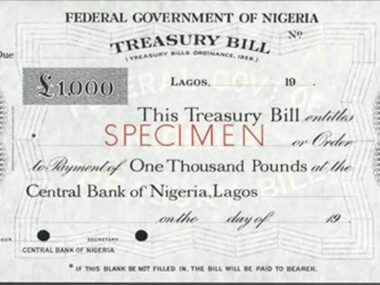
The introduction of Treasury Bills in 1960 by the CBN marked the beginning of formal money market activities in Nigeria.
Since then, the money market has evolved significantly, accommodating more sophisticated financial instruments and players.
Today, it is a vibrant and essential part of the Nigerian financial system, catering to the liquidity needs of both public and private sectors.
KEY PLAYERS IN THE NIGERIAN MONEY MARKET
The Nigerian money market consists of several key players, each playing a distinct role in maintaining the functionality of the market, and they are as follows:
CENTRAL BANK OF NIGERIA (CBN)
As the apex bank, the CBN is the most influential player, responsible for regulating the market and ensuring monetary stability.
It issues Treasury Bills and other instruments to manage liquidity in the economy.
COMMERCIAL BANKS
Commercial banks are primary participants in the money market, providing short-term lending and borrowing opportunities to clients.
They help channel funds between savers and borrowers.
DISCOUNT HOUSES
Discount houses facilitate the buying and selling of money market instruments, including Treasury Bills and commercial papers, making the market more liquid and accessible.
OTHER FINANCIAL INSTITUTIONS
These include microfinance banks, pension funds, insurance companies, and institutional investors who participate in the money market by investing in or trading short-term financial instruments.
INSTRUMENTS TRADED IN THE NIGERIAN MONEY MARKET
Several instruments are traded in the Nigerian money market, each serving specific purposes for liquidity management and short-term financing. These instruments include:
TREASURY BILLS (TBs)
Treasury Bills are short-term government securities issued by the CBN on behalf of the Nigerian government.
They are considered one of the safest investments due to the backing by the federal government.
TBs are typically issued for periods ranging from 91 days to 364 days and are used to control money supply and inflation while offering investors a relatively low-risk investment option.
COMMERCIAL PAPERS (CPs)
Commercial Papers are unsecured, short-term debt instruments issued by corporations to finance their short-term liabilities.
They usually mature within nine months and offer businesses a way to raise capital without resorting to traditional loans.
In Nigeria, large corporations with solid credit ratings often issue CPs, providing investors with returns higher than Treasury Bills, though with higher risks.
CERTIFICATES OF DEPOSIT (CDs)
A Certificate of Deposit is a time deposit issued by commercial banks, which pays a fixed interest rate for a specific maturity period.
In the Nigerian money market, CDs are considered safe investments, offering higher interest rates than regular savings accounts but requiring investors to leave their money untouched until the maturity date.
BANKERS’ ACCEPTANCES (BAs)
Bankers’ Acceptances are short-term debt instruments issued by banks to finance trade.
They are essentially a promise by a bank to pay a specified amount on a future date, usually within 30 to 180 days.
In Nigeria, BAs are often used in international trade and are backed by the creditworthiness of the issuing bank.
REPURCHASE AGREEMENTS (REPOs)
Repurchase Agreements, or Repos, are agreements in which one party sells a security to another with a promise to repurchase it at a future date and a predetermined price.
Repos are used by banks and financial institutions in Nigeria to manage liquidity and are considered a form of secured short-term borrowing.
FUNCTIONS OF THE MONEY MARKET IN NIGERIA
The money market serves several important functions in Nigeria’s financial system, and they are as follows:
LIQUIDITY MANAGEMENT
The money market provides institutions with the ability to manage their liquidity needs efficiently.
Trading short-term financial instruments helps banks and businesses to quickly convert assets into cash or meet short-term obligations, ensuring the smooth operation of the financial system.
RISK MANAGEMENT
The money market enables participants to hedge against risks associated with interest rates and inflation.
For example, businesses can use short-term instruments like Commercial Papers and Treasury Bills to manage risks while meeting funding requirements.
INVESTMENT OPPORTUNITIES
For investors, the money market offers low-risk, short-term investment opportunities.
Instruments like Treasury Bills and Certificates of Deposit are appealing to risk-averse investors seeking stable returns over a short period.
FUNDING FOR BUSINESSES AND GOVERNMENTS
The money market provides a platform for both businesses and governments to raise short-term funds.
Businesses issue Commercial Papers, while the government issues Treasury Bills to manage liquidity and finance various projects.
BENEFITS OF THE MONEY MARKET IN NIGERIA
The Nigerian money market provides a range of benefits to the economy, and they are:
EFFICIENT ALLOCATION OF RESOURCES
The money market ensures that resources are allocated efficiently by directing funds from those with surplus capital to those who need it for productive purposes.
This helps in reducing the idle capital in the economy.
PROMOTES ECONOMIC GROWTH
The money market promotes economic growth by providing short-term funding solutions for businesses and the government.
It facilitates the expansion of businesses and enables the government to fund projects that stimulate economic development.
ENHANCES FINANCIAL STABILITY
The money market helps maintain financial stability by ensuring liquidity within the financial system.
This is very effective in preventing liquidity crises that could destabilize the economy.
PROVIDES INVESTMENT OPPORTUNITIES
For individual and institutional investors, the money market offers a safe haven for short-term investments, especially in instruments like Treasury Bills and Bankers’ Acceptances, which provide stable returns with low risk.
CHALLENGES FACING THE MONEY MARKET IN NIGERIA
Despite its importance, the Nigerian money market faces several challenges such as the following:
REGULATORY CHALLENGES
The regulatory framework for the money market can sometimes be inadequate or slow to adapt to new financial products, leading to inefficiencies and limited market development.
MARKET VOLATILITY
The Nigerian economy is susceptible to volatility, particularly due to fluctuations in global oil prices, which affect liquidity and investor confidence in the money market.
LIMITED ACCESS TO CREDIT
Access to credit in Nigeria, especially for small and medium-sized enterprises (SMEs), remains a challenge.
The money market primarily serves large corporations and governments, leaving SMEs with fewer options for short-term financing.
INFRASTRUCTURE CONSTRAINTS
Nigeria’s financial infrastructure, including payment systems and market technology, needs further development to fully support the money market’s growth and efficiency.
CONCLUSION
The money market is an essential component of Nigeria’s financial system, playing a key role in liquidity management, risk mitigation, and short-term financing.
Despite the challenges, its contributions to the country’s economic stability and growth are undeniable.
Improvements in regulatory frameworks, infrastructure development, and increased access to credit will be essential for the continued evolution of the Nigerian money market.
Advertisements

 Cristiano Sanchez