Cristiano Sanchez
Advertisements
Have you ever applied for a loan on a mobile app and wondered what happens behind the scenes?

Why do some people get instant approvals while others face rejection?
The secret lies in your creditworthiness. With loan apps revolutionizing access to credit in Nigeria, it is essential to understand how they evaluate your credit profile.
Advertisements
In this article, we’ll unpack the factors loan apps use to assess your creditworthiness, the technology driving these decisions, and practical steps you can take to improve your chances of approval. Let’s proceed.
WHAT IS CREDITWORTHINESS?
Creditworthiness is a measure of your ability to borrow money and repay it on time.
It’s the foundation of trust between you and a lender.
Advertisements
Traditionally, banks relied on documents like pay slips, collateral, and formal credit reports to gauge a borrower’s reliability.
However, with the rise of digital loan platforms, this process has evolved.
Loan apps now use a combination of traditional and alternative data points to assess your financial habits, making loans accessible to Nigerians who might not have a formal credit history.
This shift has made borrowing faster and more inclusive.
KEY FACTORS LOAN APPS USE TO ASSESS CREDITWORTHINESS
Loan apps take a multi-faceted approach to evaluating borrowers, relying on various data points that paint a holistic picture of your financial behaviour such as:
PERSONAL INFORMATION
When you sign up for a loan app, you’re required to provide personal details such as your National Identification Number (NIN), Bank Verification Number (BVN), and phone number.
This information helps verify your identity and connects you to your financial records.
Providing accurate and complete details can enhance your credibility and streamline the approval process.
FINANCIAL HISTORY
Your financial habits are one of the most critical indicators of your ability to repay a loan.
Loan apps typically analyze your income to determine its consistency.
Regular deposits into your bank account indicate financial stability, which reassures lenders of your repayment capacity.
They also examine your transaction history. If your bank statements show responsible financial behavior—such as regular savings or timely bill payments—it significantly improves your chances of approval.
Many apps request access to these records to evaluate your financial health.
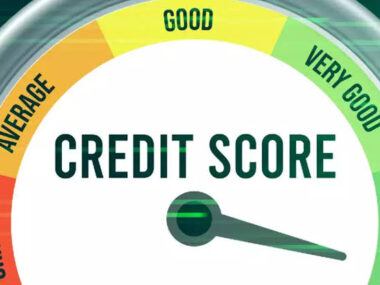
CREDIT HISTORY
Even if you’re new to loan apps, your credit history matters.
Apps collaborate with credit bureaus to assess whether you’ve borrowed money in the past and how well you managed repayments.
If you’ve defaulted on previous loans or frequently missed payment deadlines, it can hurt your creditworthiness.
Conversely, a history of timely repayments boosts your score and earns you trust.
SOCIAL AND BEHAVIORAL DATA
In addition to financial metrics, loan apps sometimes analyze social and behavioral data.
For instance, your phone usage patterns—such as how frequently you recharge airtime—may provide insights into your spending habits.
Some apps even factor in social media activity, looking at how responsible and stable your online presence appears.
While this might seem unconventional, it helps them form a broader view of your reliability as a borrower.
THE ROLE OF TECHNOLOGY IN CREDIT SCORING
AI AND MACHINE LEARNING
Loan apps harness the power of Artificial Intelligence (AI) and Machine Learning (ML) to process vast amounts of data quickly.
These technologies analyze everything from your income and spending patterns to your social behavior, creating a predictive model of your repayment likelihood.
For example, Carbon uses ML to evaluate credit risk and determine loan limits.
BIG DATA ANALYTICS
Big data is another critical component of digital credit scoring.
By aggregating information from various sources—like your financial transactions and mobile behavior—loan apps generate real-time credit scores.
This not only speeds up loan decisions but also ensures that assessments are more tailored to individual borrowers.
COMMON CHALLENGES BORROWERS FACE
Despite the convenience of loan apps, many Nigerians encounter obstacles when applying for loans.
One significant challenge is the lack of a traditional credit history.
For first-time borrowers, it can be difficult to prove reliability without prior loan records.
However, alternative methods like bank transaction analysis are bridging this gap.
Another concern is data privacy. Sharing sensitive information, such as your BVN or phone usage data, may feel risky.
While most reputable loan apps prioritize security, it’s crucial to read their privacy policies and understand how your data will be used.
Lastly, not all loan apps use the same credit scoring models.
This means you could be approved by one app and rejected by another, even with the same financial profile.
Having a good understanding of each app’s criteria can help you navigate this inconsistency.
HOW TO IMPROVE YOUR CREDITWORTHINESS
Improving your creditworthiness doesn’t require drastic changes—it’s about making smart, consistent decisions.
Start by maintaining a steady income stream and ensuring your financial activities are traceable.
Using your bank account for all transactions creates a reliable record that apps can analyze.
Equally important is repaying loans on time. Delays or defaults can significantly lower your credit score, so prioritize timely payments to build trust with lenders.
Lastly, consider your digital footprint. Responsible online activity can work in your favour, while frequent loan applications or erratic phone usage might raise red flags.
POPULAR LOAN APPS IN NIGERIA AND THEIR CREDIT ASSESSMENT METHODS
To make informed borrowing decisions, it’s helpful to understand how popular loan apps in Nigeria evaluate applicants.
Carbon uses advanced algorithms to analyze your income, spending habits, and repayment history, offering a personalized loan experience.
Similarly, FairMoney focuses on bank transaction records and credit bureau data to assess reliability.
Apps like Palmcredit go a step further by incorporating mobile usage patterns into their evaluations.
Each platform has its unique strengths, so exploring multiple options can help you find one that suits your needs and financial profile.
THE FUTURE OF CREDIT SCORING IN NIGERIA
As technology evolves, credit scoring in Nigeria is poised to become even more sophisticated.
Loan apps will increasingly rely on AI and predictive analytics, allowing for more accurate assessments and tailored borrowing experiences.
Regulations are also likely to play a larger role. The Nigerian government may introduce stricter rules to ensure transparency and protect borrowers’ data.
These changes will help create a fairer and more secure lending environment.
CONCLUSION
Your creditworthiness is the key to unlocking financial opportunities with loan apps.
Having a good understanding how these platforms assess your profile and taking steps to improve your financial habits can help you boost your chances of loan approval.
Start today by reviewing your income consistency, repaying loans on time, and building a positive digital footprint.
With a little effort, you can position yourself as a reliable borrower and enjoy the benefits of Nigeria’s growing digital lending ecosystem.
If you found this guide helpful, share it with friends or leave a comment with your thoughts—we’d love to hear from you!
Advertisements

 Cristiano Sanchez